What Is a Semi-Displacement Hull?
 If you’ve spent any time researching boats, you’ve probably come across terms like displacement hull, planing hull, semi-planing hull, and semi-displacement hull. For many boaters, the terminology can be a little confusing.
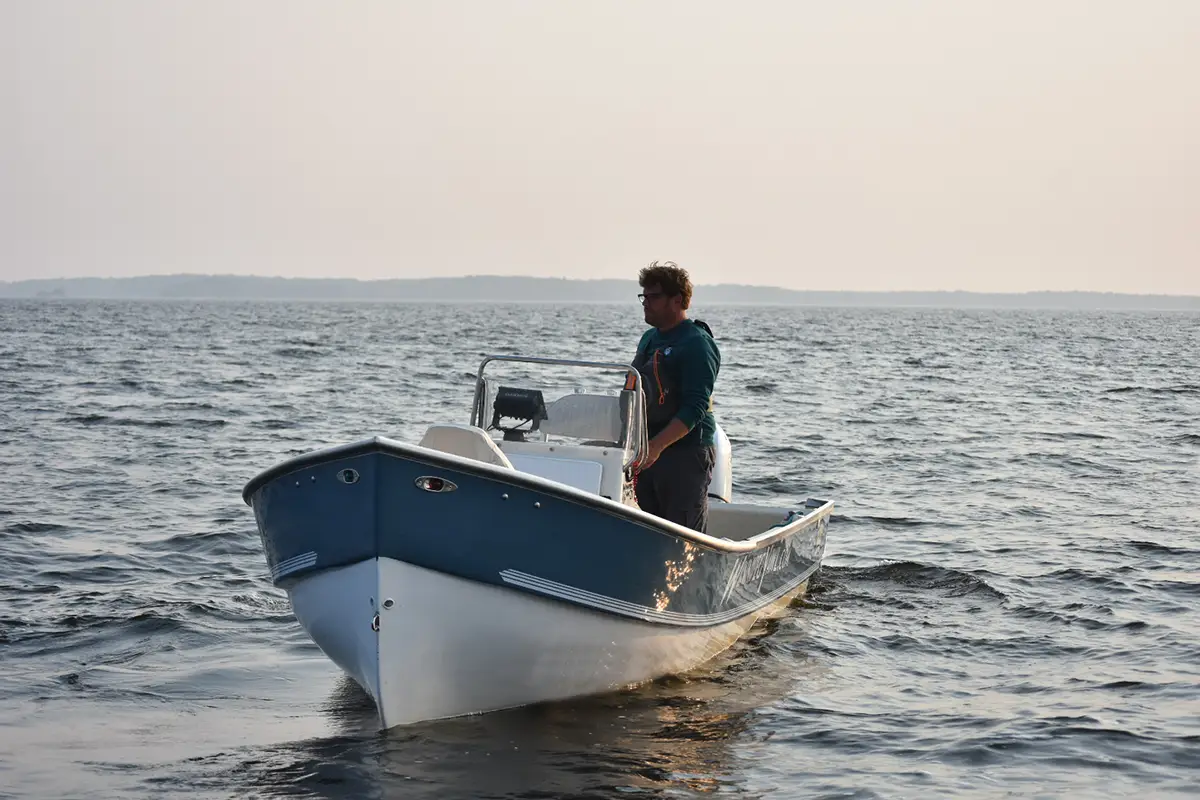
The Winnipeg Yawl, a semi-displacement hull is designed to combine some of the best characteristics of both a traditional displacement boat and a high-speed planing boat. It is a practical middle ground that offers efficiency, comfort, and versatility across a wide range of speeds.
Displacement Hulls
Traditional displacement boats move through the water by pushing it aside. Rather than riding on top of the water, they travel through it.
This type of hull is very efficient at slower speeds, provides a comfortable ride in rough water, and handles heavy loads well. The tradeoff is speed. Every displacement hull eventually reaches a point where increasing speed requires dramatically more power and fuel.
Think of a classic sailboat, trawler, or working vessel. These boats are designed for economy and comfort rather than outright speed.
Planing Hulls
The opposite of the the displacement hull is the planing hull.
As speed increases, a planing hull generates lift and rises up onto the surface of the water. This reduces drag and allows the boat to travel much faster than a displacement hull.
Most speedboats, ski boats, and sport fishing boats use planing hulls because they can achieve higher speeds.
The downside is that they generally require more horsepower, burn more fuel, and are rough riding in waves on large lakes.
The Semi-Displacement Advantage
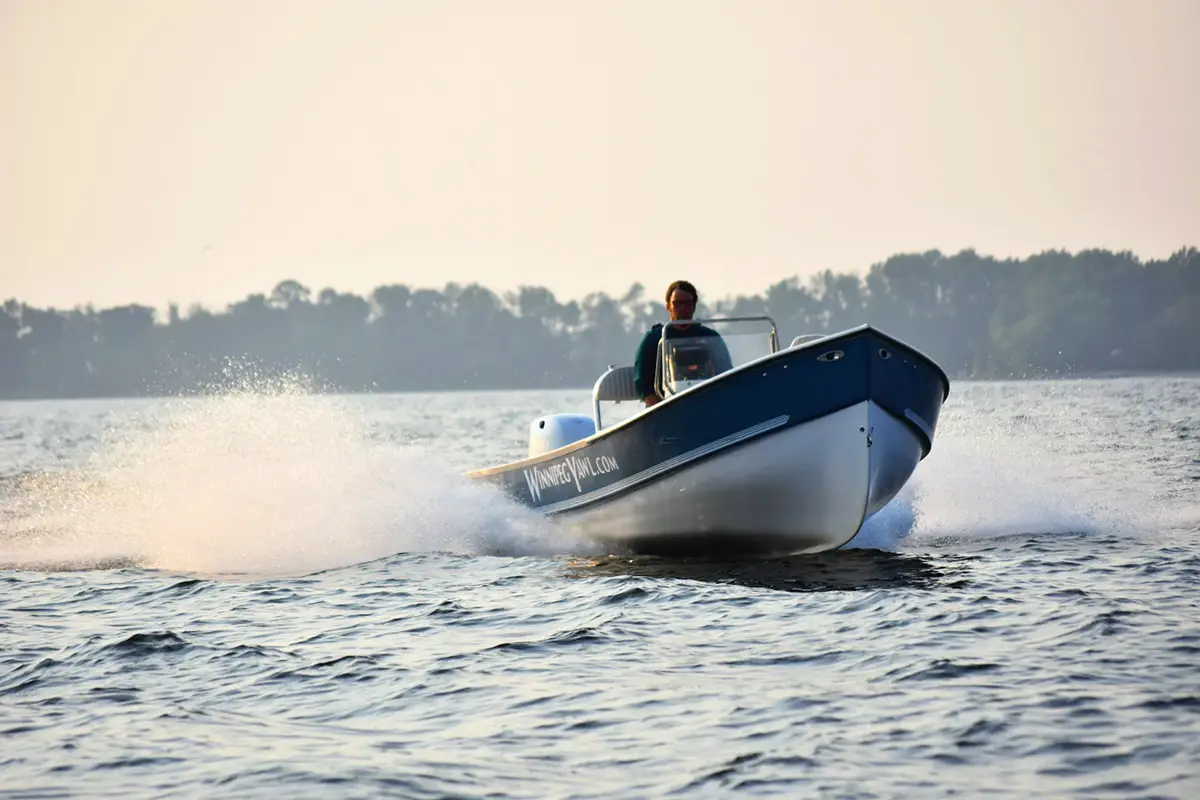
A semi-displacement hull bridges the gap between these two approaches.
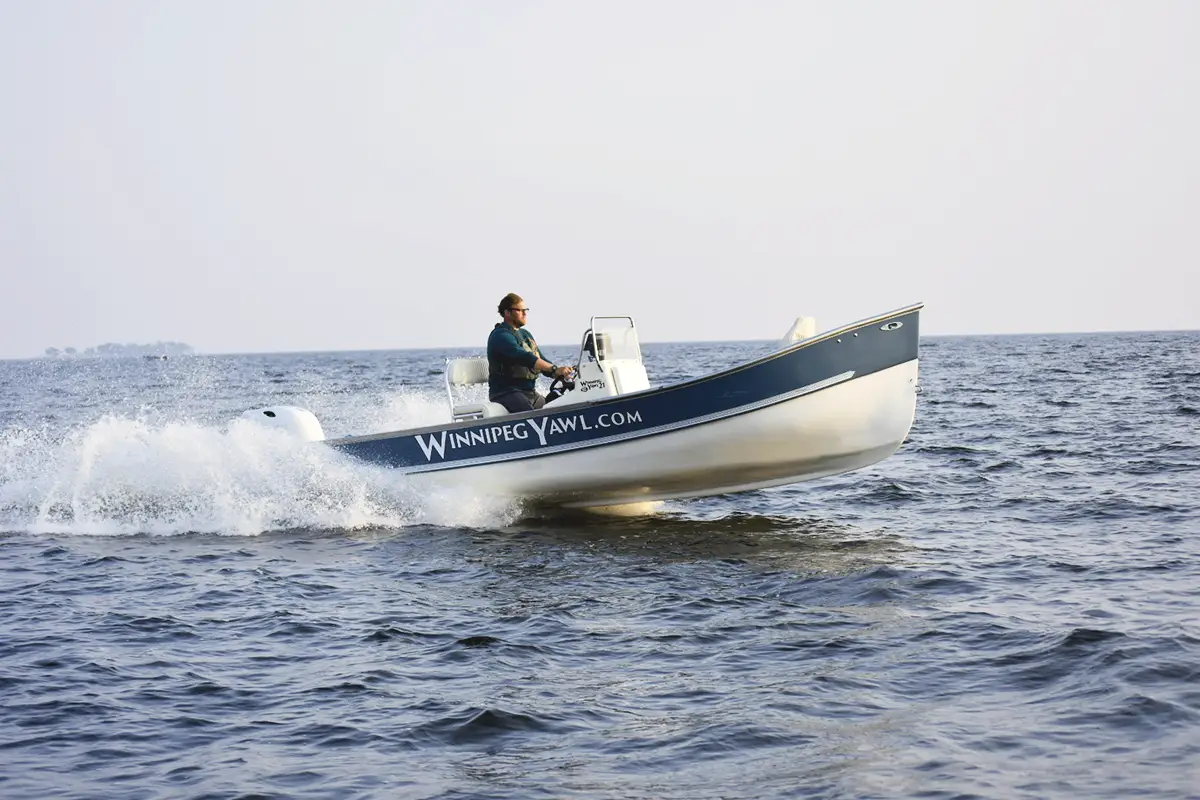
At slower speeds, it behaves much like a displacement boat, moving efficiently and comfortably through the water. As speed increases, the hull begins to generate hydrodynamic lift, reducing drag and allowing the boat to exceed the practical limits of a pure displacement design. However, it does not climb to a full plane like a planing hull design.
The result is a boat that:
- Cruises efficiently at moderate speeds
- Handles rough water without pounding, providing a comfortable ride
- Carries passengers and gear, and heavy loads with confidence
- Requires less horsepower than a comparable planing hull
- Offers a wider useful speed range than either a displacement hull or a planing hull
Semi-Displacement vs. Semi-Planing
 Boaters often ask whether there is a difference between a semi-displacement hull and a semi-planing hull.
In practice, the terms are frequently used interchangeably. Both describe a hull that gains some dynamic lift as speed increases while still relying primarily on buoyancy to support the vessel. The exact terminology often depends more on the designer or manufacturer than on any strict engineering distinction.
Why It Works So Well for the Winnipeg Yawl
The Winnipeg Yawl was never intended to be a high-speed boat, nor was it designed solely as a slow-moving displacement cruiser.
Instead, it was created for people who appreciate traditional boatbuilding, efficient cruising, and a comfortable ride in choppy or rough water.
The semi-displacement hull allows the Winnipeg Yawl to move gracefully and efficiently at modest cruising speeds while still having the ability to travel at comfortable speeds. It delivers predictable handling, fuel efficiency, and a sea-kindly ride that people who depend on getting out on the water have appreciated for generations.
In many ways, it represents the best of both worlds.
Just as the Winnipeg Yawl blends traditional craftsmanship with modern construction techniques, its semi-displacement hull combines classic seaworthiness with practical performance for today’s boater.
The Winnipeg Yawl is for boaters who value comfort, safety, and a timeless classic design that will handle big water and tuck into quiet bays and rivers for fishing, exploring and adventure.
The Winnipeg Yawl hull is the result of over 70 years of development navigating Lake Winnipeg, the 7th largest fresh water lake in the world, the Canadian North and Canadian Arctic. The unique fiberglass hull is designed to match today’s modern outboards, providing a safe, dependable, and enjoyable boating experience.